01. Problem
"How might community members effectively use an AI-powered platform to locate affordable food options and nearby donation resources so that they can reduce food insecurity while minimizing overall food waste in their communities?"
What problem exists in the world? Coordinating real-time, meaningful donations to localized food pantries is highly fragmented. Donors generally contribute items based on individual convenience rather than matching the live structural shortages of nearby distribution centers.
Who experiences this problem? Low-income individuals facing regional food insecurity, socially-conscious community donors lacking precise system transparency, and food bank operations staff dealing with misallocated inventory resources.
Why is this problem important? Nutritional scarcity directly threatens public health. Misdirected donations generate localized operational waste, meaning critical food drops sit completely unused while severe nutritional deficits persist blocks away.
Why do existing solutions fail? Current market products operate in silos. Commercial applications favor bulk B2B operations, peer-to-peer applications create transactional safety or reliability concerns, and pure-monetary setups detach donors from tangible local community visibility.
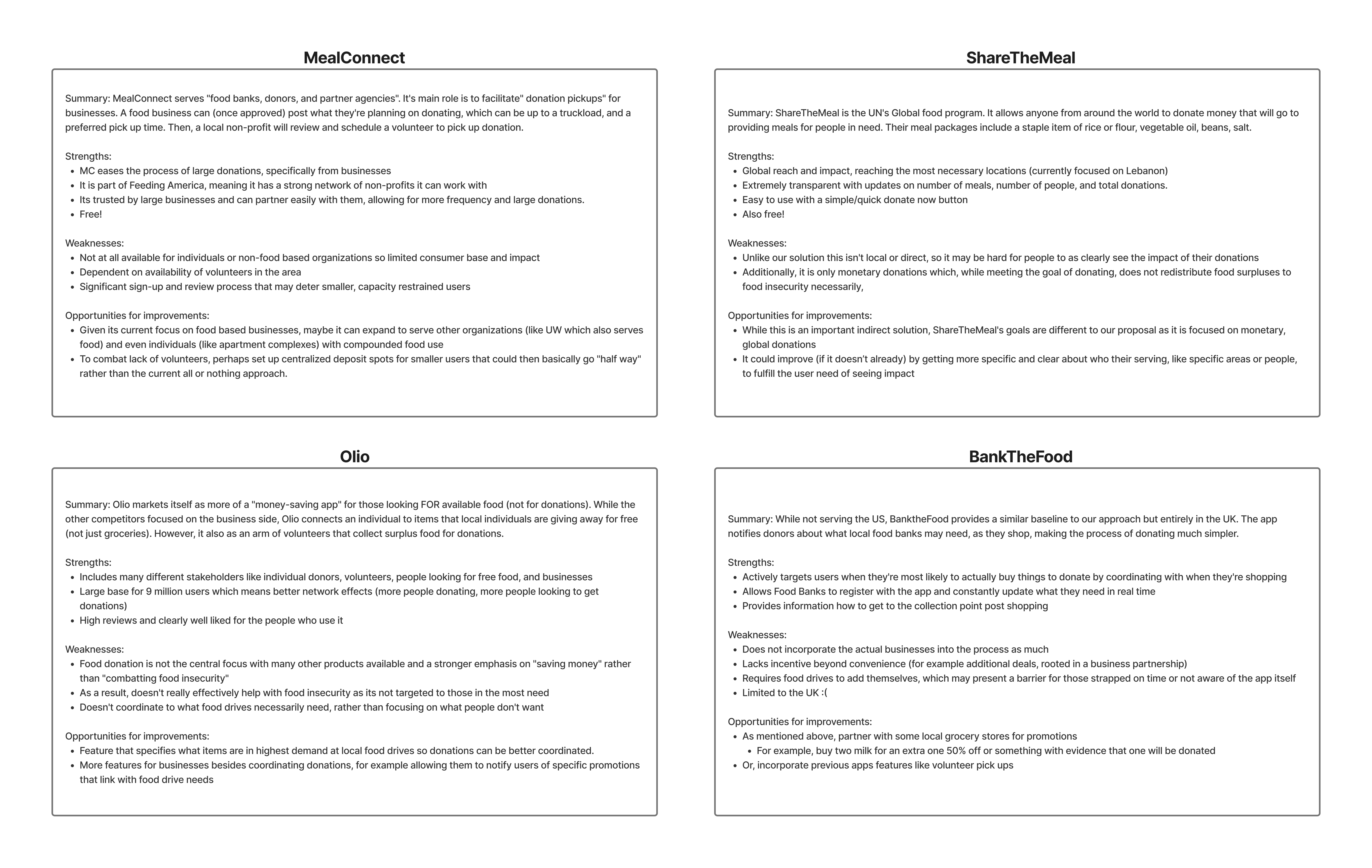
Figure 1.1: Competitive Landscape Analysis Matrix
02. Design Solution
Core Concept: FoodSwap builds a natural bridge between routine consumer grocery shopping habits and local mutual-aid demands. Rather than expecting users to navigate entirely separate donation routines, the product integrates real-time pantry requests and commercial store discounts straight into a single mobile environment.
User Interaction: Shoppers update their personal shopping lists, evaluate dynamic localized needs via geographic mapping overlays, discover synchronized vendor promotions, and safely finalize direct asset distributions to certified entities.
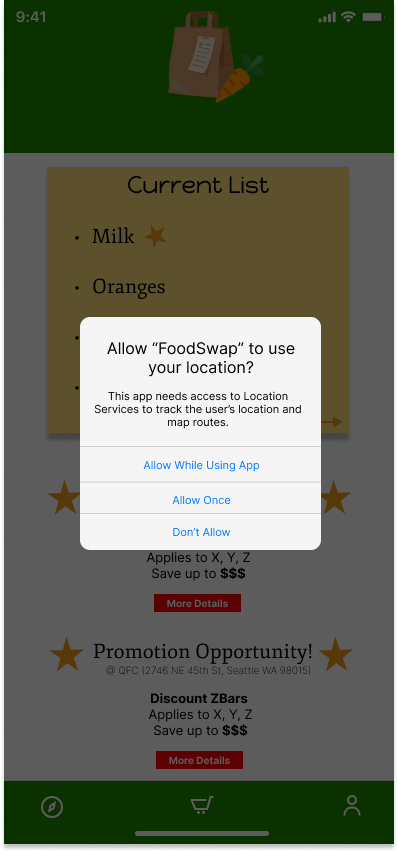
1. Location Access
Onboarding verification to align localized grocery networks and regional pantry demand maps accurately.
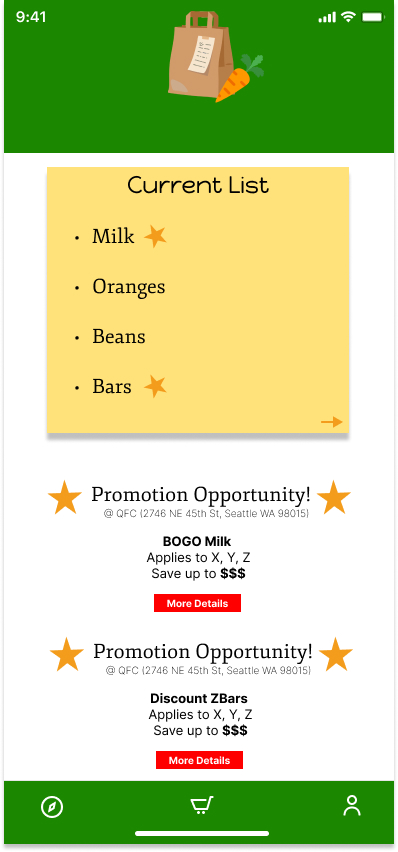
2. Smart Lists
A stylized digital list summarizing inventory, tracking notes, and nearby point-of-sale retail promotions.
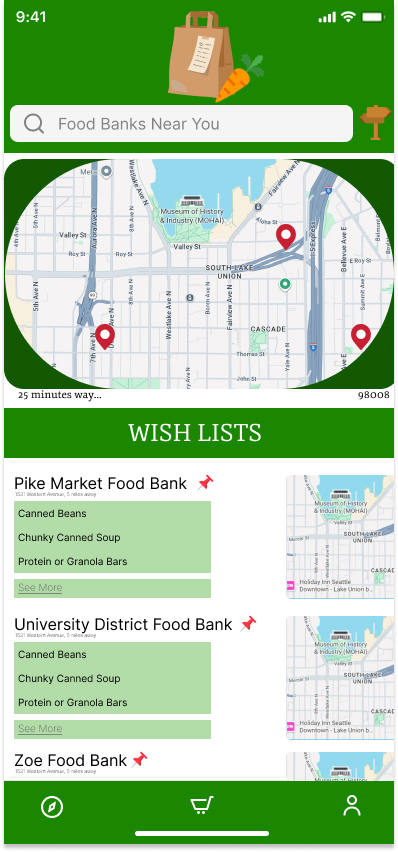
3. Food Bank Map
Interactive tracking matrix linking geographical hubs with specific itemized wish lists.
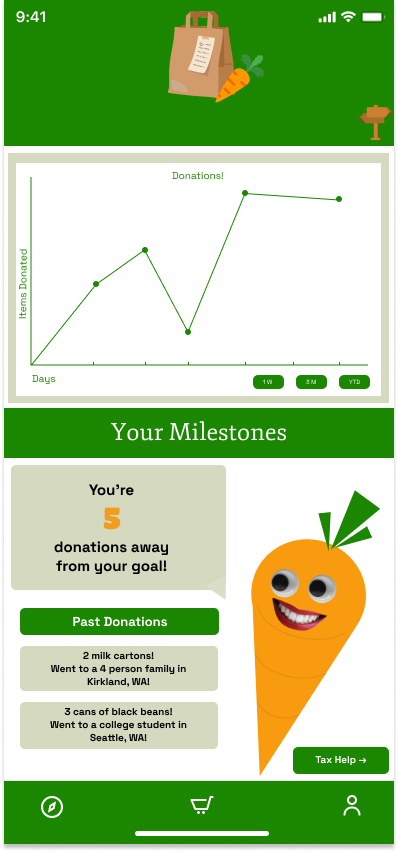
4. Milestone Tracker
Gamified user metric data panel paired with a friendly mascot to encourage retention.
03. Design Rationale
Our application layout strategy targets behavioral convenience. Users already use note systems and maps; our system architecture intentionally avoids isolating features into rigid page silos. Instead, selecting a local food bank's live wish list lets the user push items directly back onto their primary smart shopping list.
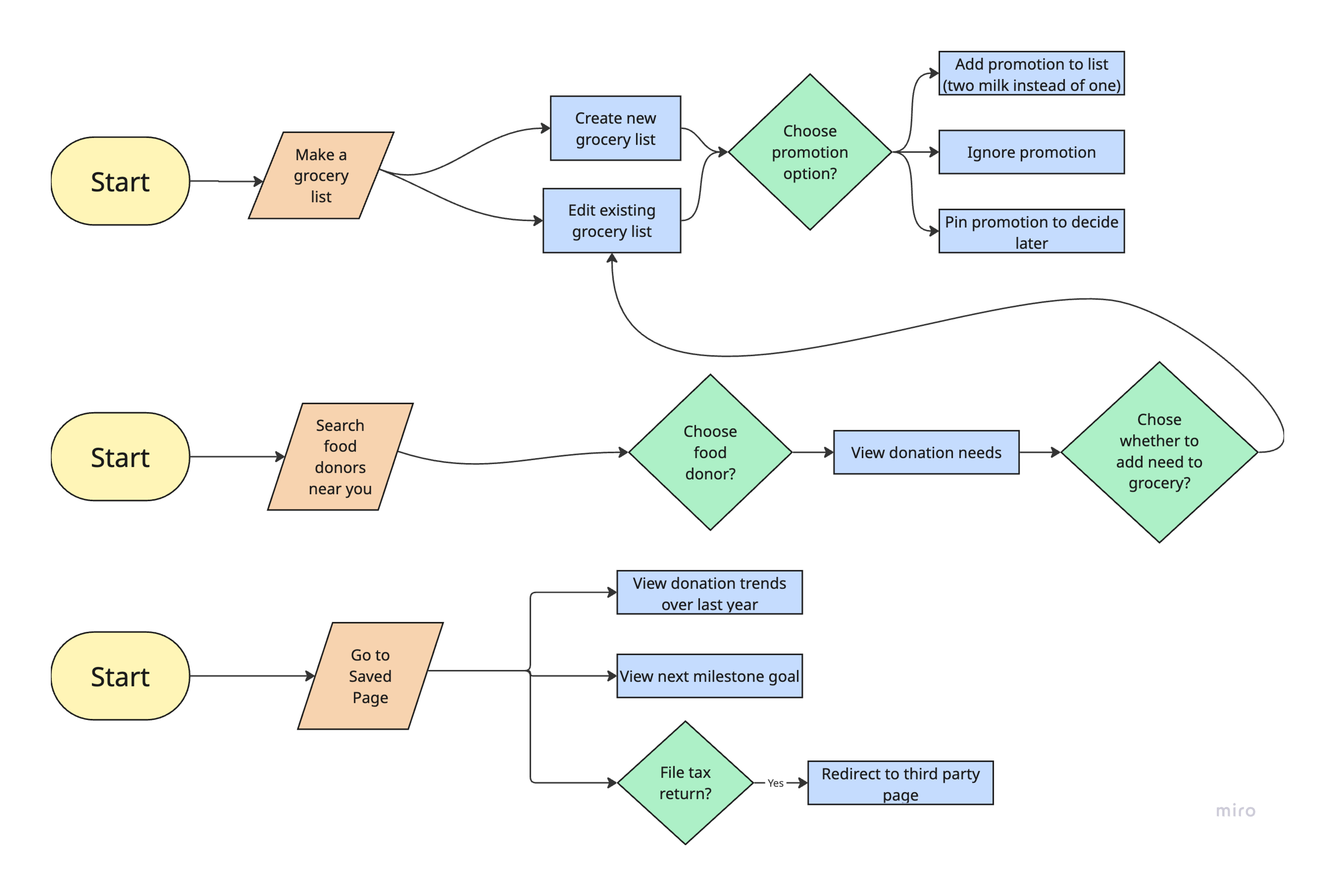
Figure 3.1: System Flow Diagram mapping Promotion Selections vs. Saved Hub Routing
Considered Trade-offs: We explicitly debated asking for tracking coordinates during the app initialization phase. While location requests can create onboarding drop-off, delivering live regional data requires immediate proximity context. We chose to manage this friction directly by clearly clarifying the value proposition right on the tracking opt-in screen.
04. Evaluation
Our evaluative process was deeply iterative, relying on layered feedback loops to transform abstract concepts into structural interfaces. Initial critical guidance from our instructor, Jade, on Team Draft #1 forced us to strictly narrow our scope, explicitly defining our primary focus demographic and determining which exact vector of the food waste ecosystem we aimed to solve.
2. Add a store promotional BOGO item to the current active grocery list.
3. Review local food bank wish lists and locate final donation milestone metrics.
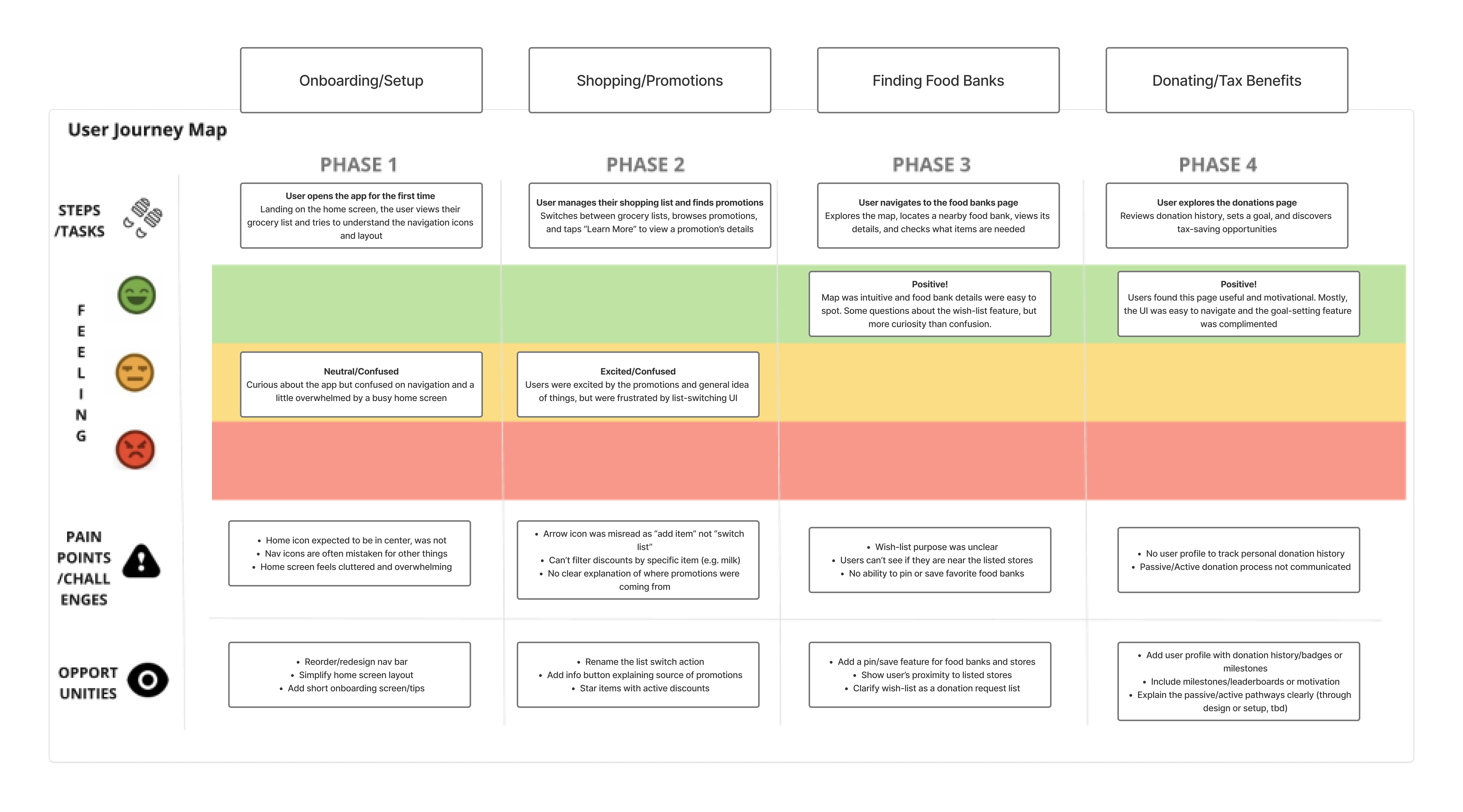
Figure 4.1: Evaluative User Journey Map charting User Emotional Tracking
Following baseline scope alignment, we executed hands-on usability testing sessions utilizing interactive low-fidelity paper prototypes. By observing peers navigate the conceptual layouts, we collected vital behavioral data regarding functional flows and macro-level asset choices. This direct user feedback served as the primary blueprint for our high-fidelity Figma builds, highlighting clear friction points where specific iconography or layout navigation labels felt ambiguous.
05. Reflection & Learning
Our primary hurdle manifested as conceptual definition early in the development lifecycle. Even with structured external feedback, synthesizing our goals required numerous rigorous iterations of Team Draft #3 to properly solidify the system mechanics. We ultimately worked through this bottleneck by returning to our competitive analysis matrices as a grounding framework, aligning our functional ideas collaboratively to discard superfluous features.
Transitioning a highly specialized concept into a visually unified design system inside Figma presented a separate micro-interaction challenge. Aligning spatial constraints, establishing typographic hierarchies, finalizing an intentional color palette, and modeling our milestone mascot demanded extensive trial-and-error.
Key Takeaways: This project demonstrated that design thinking is fundamentally an exercise in editing. Every team member contributed across all phases of the lifecycle, reinforcing that successful user experiences rely on a balance between altruistic systems and seamless, friction-free interface logic.
06. Limitations & Future Plan
System Limitations & Assumptions: The current design baseline assumes persistent real-time API syncs with active point-of-sale grocery databases and localized inventory tracking frameworks. If a neighborhood vendor lacks modern digitized infrastructure, the live update loop faces severe data delivery gaps.
If Accorded More Time: We would expand our high-fidelity interactive coverage within Figma to map out secondary screen states and edge-case user transitions. Additionally, we would conduct deeper field research at the project's inception, auditing regional grocery networks and conducting direct qualitative interviews with food pantry coordinators to validate backend workflow needs.
Future Evolution Roadmap:
- Social Architecture Expansion: Integrating dedicated community dashboards where users can publish milestone achievements, driving repeat retention through social proof.
- Household Profiles: Implementing unified household account tiers so families can easily merge separate shopping lists into shared mutual-aid metrics.
- B2B Commercial Partnerships: Developing dedicated store portals tailored to retail grocers, optimizing inventory routing directly through dynamic consumer-facing incentives.
07. References
- Mourad, M. (2015). Thinking Outside the Bin: Is There a Better Way to Fight "Food Waste"? Berkeley Journal of Sociology, 59, 26–34.
- Yahia, E. (Ed.). (2020). Preventing food losses and waste to achieve food security and sustainability (1st ed.). Burleigh Dodds Science Publishing Limited.
- Evans, A. I., & Nagele, R. M. (2018). A Lot to Digest: Advancing Food Waste Policy in the United States. Natural Resources Journal, 58(1), 177–214.
- Sewald, C. A., Kuo, E. S., & Dansky, H. (2018). Boulder Food Rescue: An Innovative Approach to Reducing Food Waste and Increasing Food Security. American Journal of Preventive Medicine, 54(5), S130–S132.
- Warshawsky, D. N. (2023). The Rise of the Food Bank. In Food Waste, Food Insecurity, and the Globalization of Food Banks (pp. 9–30). University of Iowa Press.
- Pratt, R. (2021). Nourishing the City: Integrating Local Food Systems in Seattle's Central District. ProQuest Dissertations & Theses.